
Updated 19 November 2026
In short: For most of US history there was no law protecting transgender people from being fired. Protection came first from a few states and cities, then from executive orders such as Kansas in 2007 and the federal contractor order of 2014. In 2011 Hawaii, Nevada and Connecticut all added gender identity to their civil rights laws. In June 2020 the Supreme Court ruled in Bostock v. Clayton County that firing a worker for being transgender or gay is sex discrimination under federal law.
The phrase “gender identity movement” covers a long effort by transgender people and their allies to be protected in work, housing, schools and public places. This article follows the legal side of that effort in the United States: the patchwork of state laws, the failed attempts at a federal statute, and the court ruling that changed the picture. It also covers the role of employers, which used to be discussed here in a short piece about corporate equality scores; that post now redirects to this one.

What gender identity laws do
Gender identity means a person’s internal sense of their own gender, which may differ from the sex recorded at birth. Laws that list “gender identity” or “gender identity or expression” as a protected category make it unlawful to fire, refuse to hire, deny housing to or refuse service to someone because of it, in the same way the law already protects race, religion and sex.
Minnesota was the first state to add such protection, in 1993. By 2010 roughly a dozen states and the District of Columbia had done so, along with many cities.
The issue is global. Thailand is a well-known example: transgender people there are highly visible in public life, yet many have reported verbal, sexual and physical harassment because of their gender identity, and the country has no law recognising a change of legal gender.
The Kansas executive order, 2007
Where legislatures would not act, governors sometimes did. In August 2007 Kansas Governor Kathleen Sebelius signed an executive order banning discrimination in state employment on the basis of sexual orientation and gender identity. It covered only state agencies under her control, not private employers, and a later governor rescinded it in 2015. Orders like this were limited, but they showed that protection was workable and gave campaigners a model to point to.
ENDA: the federal bill that never passed
The Employment Non-Discrimination Act, or ENDA, was introduced in Congress in various forms from 1994 onward. In 2007 a version without gender identity passed the House 235 to 184 after a split among campaign groups over dropping transgender protections. Later versions included gender identity again. In November 2013 an inclusive ENDA passed the Senate 64 to 32, but the House never voted on it. The broader Equality Act, first introduced in 2015, has also stalled.
The failure of ENDA is the main reason the story then moved to the states and, eventually, to the courts.
The 2011 state wave
2011 was a turning point. Three states acted within a few months.
- Hawaii. Governor Neil Abercrombie signed Act 34 on 2 May 2011, adding gender identity or expression to the state’s employment discrimination law.
- Nevada. The legislature passed AB 211, which Littler, an employment law firm, noted added gender identity or expression to the employment law from 1 October 2011. Nevada also passed laws covering housing and public places that year.
- Connecticut. Governor Dannel Malloy signed HB 6599 on 1 July 2011, effective 1 October, covering employment, housing, credit and public accommodation. The Human Rights Campaign welcomed its passage as the state’s first explicit protection for transgender people.
The Movement Advancement Project’s 2011 report counted 15 states plus DC with gender identity employment protection by the end of that year.
The federal contractor order, 2014
On 21 July 2014 President Obama signed Executive Order 13672, which added sexual orientation and gender identity to the list of protected categories for federal contractors and federal employees. Federal contractors employ about a fifth of the US workforce, so the order reached far beyond government. Its contractor provisions lapsed in January 2025, when the older order it amended, Executive Order 11246, was revoked.
Bostock v. Clayton County, 2020
The biggest change came from the Supreme Court. Bostock v. Clayton County combined three cases: Gerald Bostock, a child welfare coordinator in Georgia fired after joining a gay softball league; Donald Zarda, a skydiving instructor in New York; and Aimee Stephens, a funeral director in Michigan fired after telling her employer she was transgender.
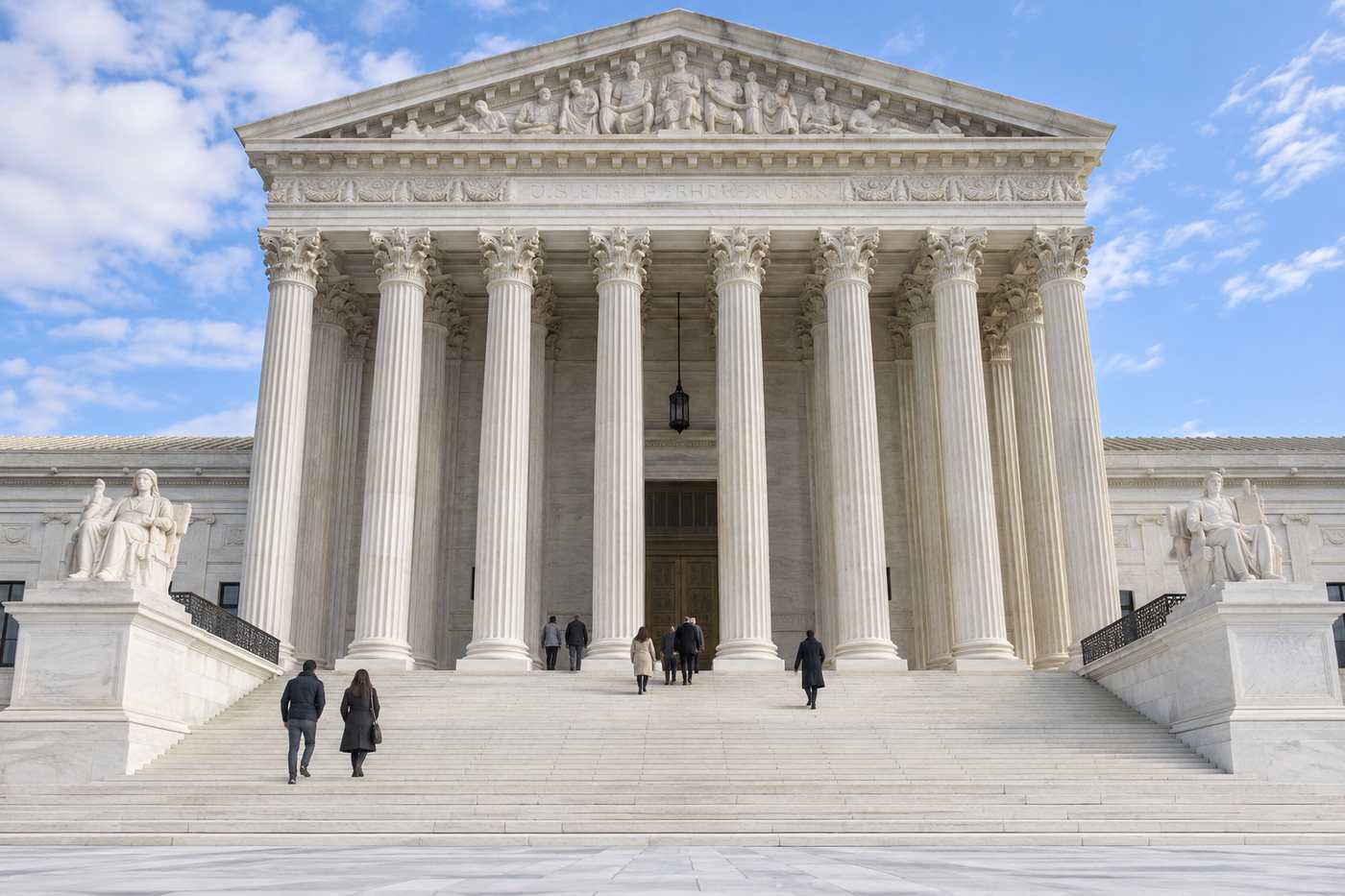
On 15 June 2020 the Court ruled 6 to 3 that Title VII of the Civil Rights Act of 1964, which bans discrimination “because of sex”, covers gay and transgender workers. Writing for the majority, Justice Neil Gorsuch reasoned that “it is impossible to discriminate against a person for being homosexual or transgender without discriminating against that individual based on sex.” The full opinion applies to employers with 15 or more workers.
Bostock settled the employment question but left others open. As the Congressional Research Service explained, it did not decide how the reasoning applies to other laws such as Title IX in schools, to bathrooms and dress codes, or to religious employers. Those questions are covered in our article on LGBT students and the law.
The role of employers
Many large companies adopted gender identity policies years before the law required it. Corporate equality surveys, such as the one in which companies like Coca-Cola received perfect scores in the late 2000s, rated employers on non-discrimination policies, benefits for partners and transgender-inclusive health cover. A 2013 GAO review of state laws found that relatively few complaints were filed in states that had such protections.

For how workplace rights fit into the wider human rights picture, see our guide to human rights and LGBT rights. Marriage, which shaped partner benefits at work, is covered in our history of the Defense of Marriage Act.
Key takeaways
- Minnesota was the first state to protect gender identity, in 1993; by the end of 2011 about 15 states and DC did.
- Kansas protected state workers by executive order in August 2007.
- ENDA was introduced for two decades but never became law.
- Hawaii, Nevada and Connecticut all passed gender identity laws in 2011.
- Bostock v. Clayton County (15 June 2020, 6 to 3) held that federal law bans firing workers for being gay or transgender.
Common questions
Is it legal to fire someone for being transgender in the US?
No, for employers with 15 or more workers. The Supreme Court held in Bostock v. Clayton County (2020) that this is sex discrimination under Title VII.
What was ENDA?
The Employment Non-Discrimination Act, a proposed federal law banning job discrimination based on sexual orientation and, in later versions, gender identity. It passed the Senate in 2013 but never became law.
Which states protected gender identity in 2011?
Hawaii, Nevada and Connecticut all added gender identity to their civil rights laws that year.
Does Bostock apply to schools and housing?
Bostock interpreted Title VII, the employment law. Its reasoning has been applied to other laws by some agencies and courts, but those questions remain contested.
Who wrote the Bostock opinion?
Justice Neil Gorsuch wrote for the six-justice majority.
How we wrote this: Dates and votes come from court opinions, government documents and law firm and research summaries published at the time. Federal executive orders have changed since 2025, so check the current rules before relying on them. Last checked November 2026.
Sources
- Justia: Bostock v. Clayton County, 590 U.S. 644 (2020)
- Congressional Research Service: What Bostock means
- Littler: Nevada adds gender identity categories
- Human Rights Campaign: Connecticut transgender bill
- Movement Advancement Project: Momentum Report 2011
- GAO: State laws on gender identity employment discrimination (2013)
- White House archive: Executive Order 13672 fact sheet
Leave a Reply